Knowing how to find internal and external link opportunities is one of the most valuable skills an SEO professional can develop. Links remain a top-three ranking factor, yet many teams still approach link building reactively, waiting for opportunities to appear rather than systematically uncovering them.
The difference between a site that plateaus at page two and one that dominates page one often comes down to a disciplined linking practice. Whether you're auditing an enterprise site with thousands of pages or building authority for a growing blog, the methods you use to discover link gaps will shape your entire organic growth trajectory.
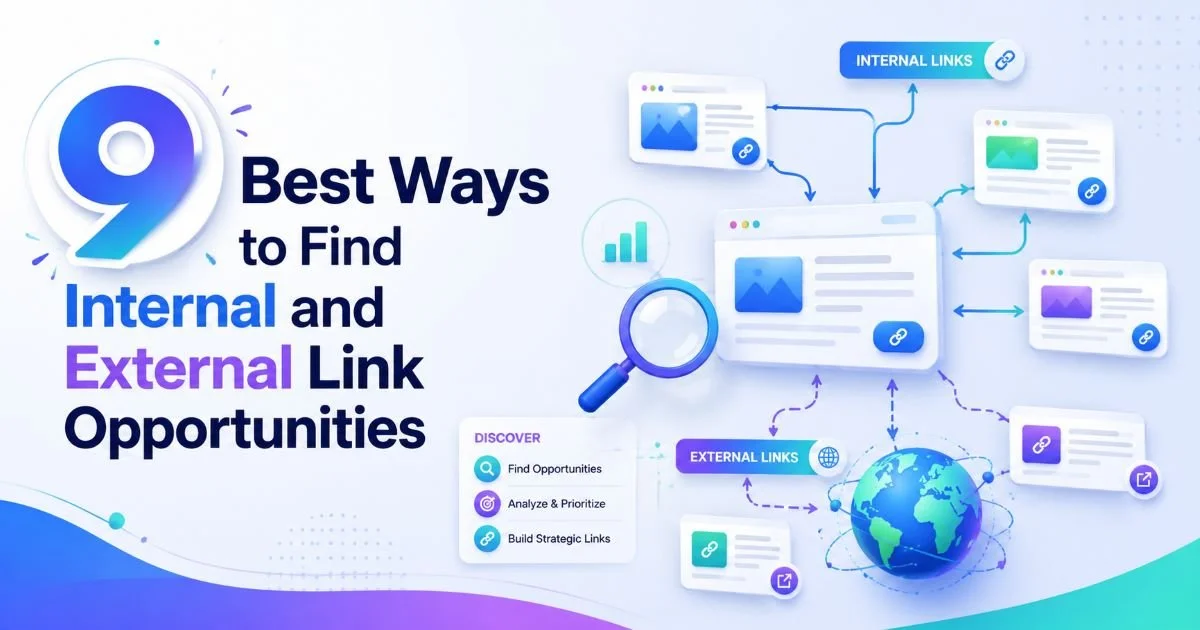
This guide breaks down nine proven approaches that work right now, organized into four strategic categories. For a broader overview of link discovery fundamentals, our complete guide to finding internal and external link opportunities covers the foundational concepts in depth. Let's get into the specific tactics.
Key Takeaways
- Run a regular SEO link audit to catch orphan pages and broken internal links fast.
- Use competitor backlink analysis to uncover external link-building targets you're missing.
- Content gap analysis reveals pages that deserve internal links but currently have none.
- Link prospecting tools save hours compared to manual outreach list building.
- Combining an internal linking strategy with external outreach compounds ranking improvements over time.
1–2: Audit Your Existing Link Structure
Run a Site-Wide Crawl
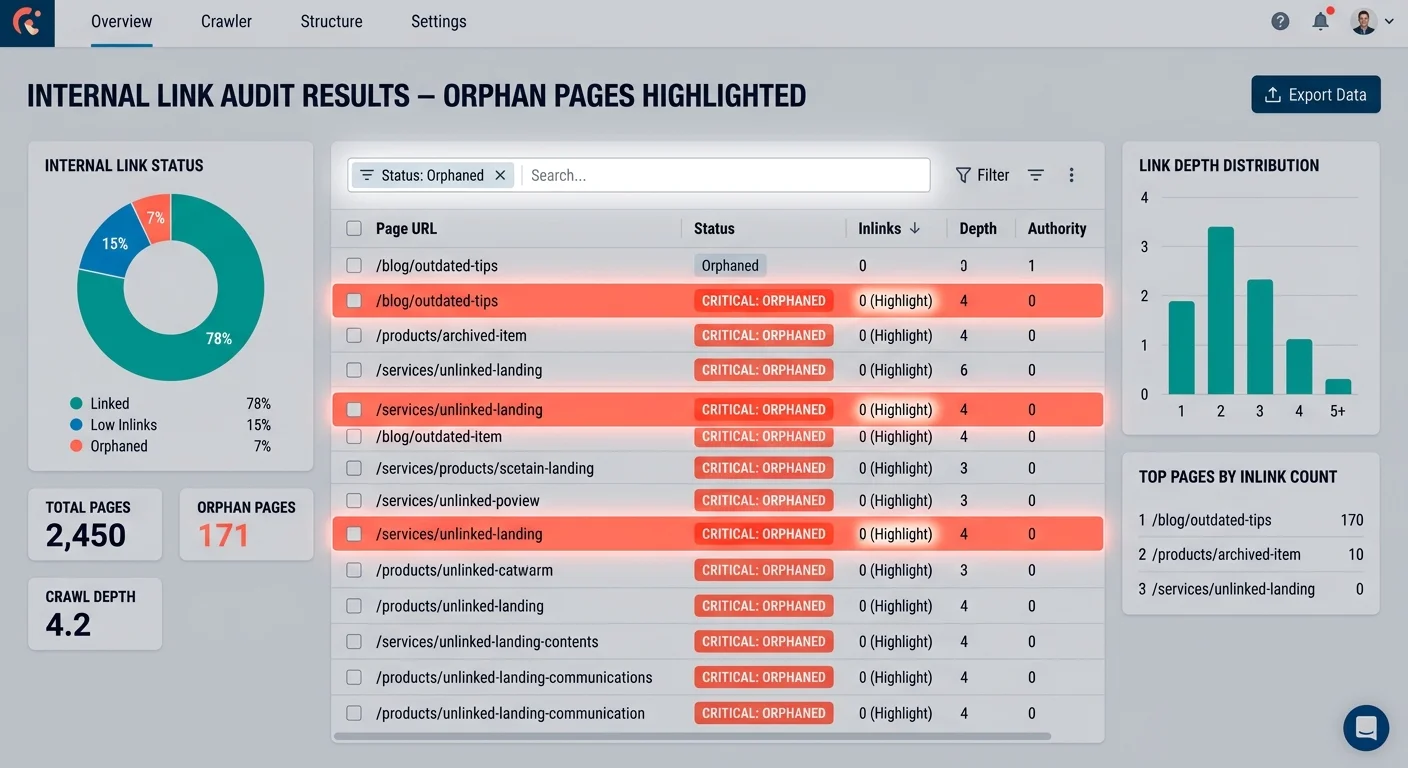
Before chasing new backlink opportunities, look at what you already have. A thorough SEO link audit using a crawler like Screaming Frog or Sitebulb will map every internal link on your site, flagging broken links, redirect chains, and pages buried more than four clicks deep. This baseline data tells you exactly where link equity is flowing—and where it's getting wasted. Most SEO teams are surprised to find that 15–25% of their internal links point to redirected or dead URLs.
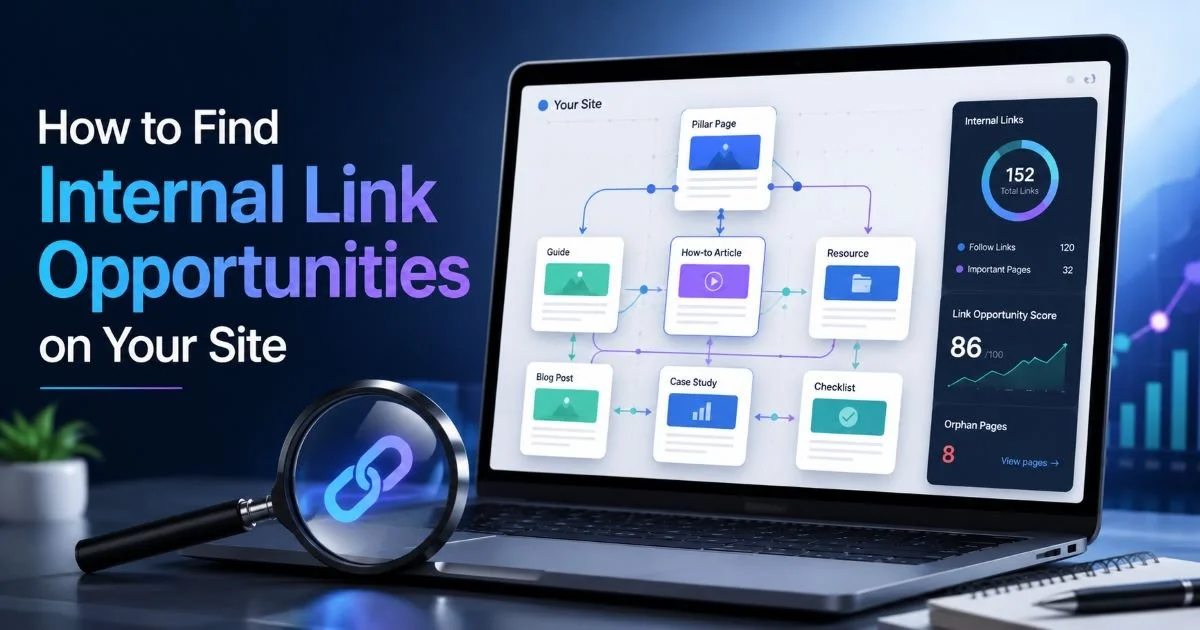
Set your crawl to export all inlinks and outlinks per URL. Sort pages by inlink count ascending to quickly spot your most neglected content. Pages with strong keyword rankings but few internal links are immediate wins; adding just two or three contextual links from related pages can push them from position eight to position four. This is the fastest way to find internal link opportunities without producing any new content.
Schedule these crawls monthly for large sites and quarterly for smaller ones. Tracking changes over time reveals whether your internal linking strategy is improving or degrading as new content gets published. Document every fix in a spreadsheet so you can measure the ranking impact four to six weeks later. Consistency here pays compounding returns.
Export your crawl data to a shared spreadsheet with columns for URL, current inlinks, target inlinks, and date fixed.
Identify Orphan and Underlinked Pages
Orphan pages, those with zero internal links pointing to them, are invisible to search engines unless they appear in your sitemap. Cross-reference your crawl data with Google Search Console's indexed pages report. Any URL receiving impressions but missing from your crawl results is likely orphaned. These pages represent wasted indexing budget and missed ranking potential.
Fix orphan pages by adding them to relevant hub pages, category listings, or contextually related blog posts. Prioritize pages that already rank between positions 10 and 20, since internal links can provide the push needed to reach page one. This tactic is particularly effective for e-commerce sites where product pages often lose their internal links after category restructures or seasonal promotions end.
Beyond orphan pages, look for "underlinked" pages, those with only one or two inlinks when comparable pages have ten or more. A content piece about link prospecting techniques, for instance, should be linked from every related article on your site discussing outreach or SEO strategy. Balancing internal link distribution is one of the simplest ways to improve crawl efficiency and topical authority signals.
3–5: Mine Competitor and Industry Data
Reverse-Engineer Competitor Backlinks
Competitor backlink analysis remains the most reliable method of external link building discovery. Export the backlink profiles of your top five organic competitors using Ahrefs, Semrush, or Moz. Filter for dofollow links from domains with a Domain Rating above 30, then sort by referring page traffic. You want links that send both authority and actual visitors. Look for patterns: are competitors getting linked from resource pages, guest posts, or data citations?
Create a "link gap" report by comparing your backlink profile against competitors. Any domain linking to two or more competitors but not to you is a high-probability prospect. These sites have already demonstrated a willingness to link within your niche. Reach out with content that's genuinely better or more current than what they're currently referencing. Success rates on link gap outreach typically run between 5% and 15%, which is significantly higher than cold prospecting.
Don't ignore nofollow links from high-traffic publications. While they pass limited PageRank, they drive referral traffic and brand visibility. A nofollow link from a site like Forbes or TechCrunch can indirectly lead to natural dofollow links as more people discover your content. Track both link types in your external link-building campaigns.
Find Unlinked Brand Mentions
Set up Google Alerts, Talkwalker Alerts, or Brand24 to monitor mentions of your brand, product names, and key executives. When someone mentions you without linking, you have a warm outreach opportunity. The author already knows and values your brand, but they simply didn't add the hyperlink. A polite email requesting the link converts at remarkably high rates, often 30% or more.
Expand this tactic beyond brand names. Monitor mentions of your original research, proprietary data, or unique frameworks. If you published a study on link-building trends and a blogger references your statistics without attribution, that's a backlink opportunity waiting to be claimed. Tools like BuzzSumo and Mention make this monitoring largely automatic once configured.
"The easiest backlink to earn is the one someone already wanted to give you—they just forgot the hyperlink."
Use API-Powered Prospecting Tools
Manual link prospecting doesn't scale. For teams managing multiple clients or large content libraries, API-powered tools drastically reduce the time spent building prospect lists. Platforms that aggregate SERP data, domain metrics, and contact information let you filter thousands of potential link targets in minutes. For a comprehensive comparison of the best options available, the best SEO API roundup covers the top platforms worth evaluating for programmatic link prospecting workflows.
The real power of API-driven prospecting is combining data sources. Pull SERP results for your target keywords, cross-reference linking domains with authority metrics, and filter by content freshness all programmatically. This approach lets you build highly targeted outreach lists that would take weeks to compile manually. It's how agencies handling dozens of campaigns maintain quality at volume.
| Method | Time Investment | Prospect Quality | Scalability |
|---|---|---|---|
| Manual Google Search | High | Medium | Low |
| Competitor Backlink Export | Medium | High | Medium |
| Unlinked Mention Monitoring | Low | Very High | Medium |
| API-Powered Prospecting | Low | High | Very High |
| Broken Link Building | Medium | Medium | Medium |
API-based tools require initial setup time and technical knowledge, but the long-term efficiency gains are substantial for teams running ongoing campaigns.
6–7: Use Your Own Content for Internal Wins
Topic Cluster Mapping
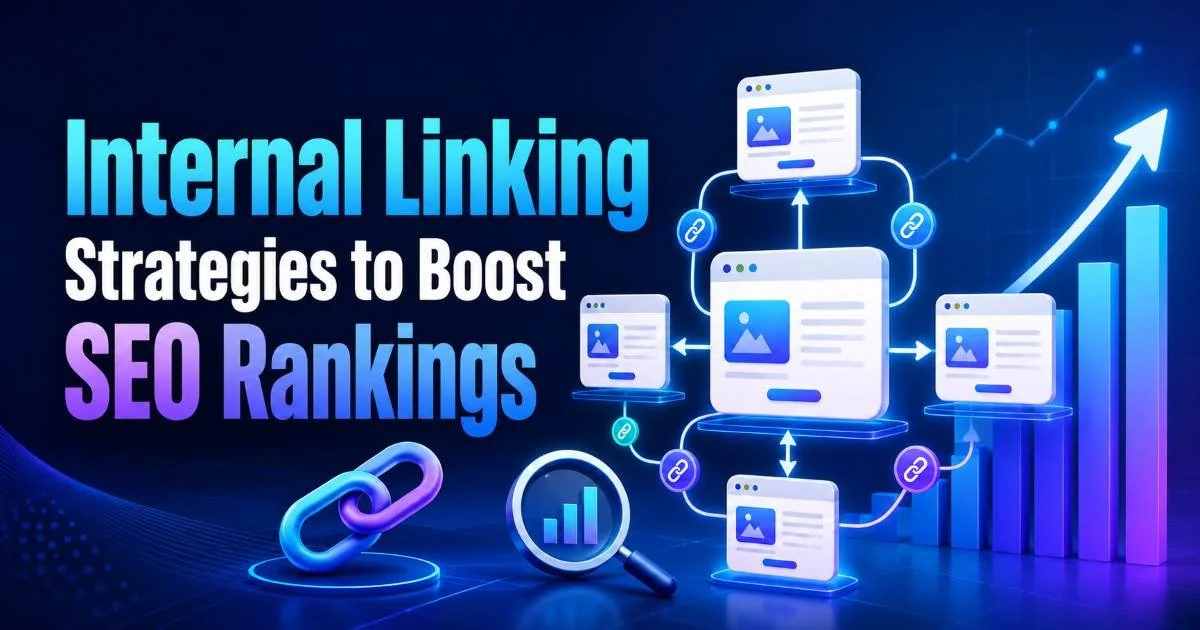
A strong internal linking strategy starts with clear topic clusters. Map every piece of content on your site to a pillar page and its supporting articles. Each cluster article should link to the pillar and to at least two sibling articles within the same cluster. This structure tells search engines which page is your authoritative resource on a topic and distributes ranking signals efficiently across the cluster.
Use a spreadsheet or visual tool like Whimsical to diagram your clusters. Color-code links that exist versus links that are missing. Most teams discover that their clusters are incomplete articles that exist, but aren't connected. Fixing these gaps is one of the highest-ROI activities in SEO because it requires no new content creation, just editorial updates to existing pages. Aim to complete this mapping exercise once per quarter as your content library grows.
When building new clusters, plan the internal links before you write. Include placeholder links in your content briefs so writers naturally weave them into the narrative. This proactive approach prevents the accumulation of orphan content and keeps your site architecture clean from day one. It's far easier to maintain links than to retrofit them across hundreds of articles.
Add a "Related Articles" field to your content brief template so writers include internal links during drafting, not after.
Anchor Text Optimization Passes
Internal anchor text is an underused ranking lever. Many sites default to generic phrases like "click here" or "read more" instead of descriptive, keyword-rich anchors. Audit your top 50 pages and examine the anchor text of every internal link pointing to them. If most anchors are generic or identical, you're missing an opportunity to reinforce topical relevance.
Vary your anchor text naturally. For a page targeting "link prospecting," use anchors like "link prospecting workflow," "finding link prospects," and "building a prospect list." This variation signals breadth of relevance without triggering over-optimization penalties. Google's internal linking documentation emphasizes that descriptive anchors help their systems understand page relationships better.
Run this optimization pass every time you publish a new batch of content. Each new article is a chance to add fresh internal links with well-crafted anchors to your most important pages. Over six months, these incremental additions compound into a significantly stronger internal link graph that supports both user navigation and search engine crawling.
8–9: Scale with Outreach and Automation
Build Targeted Outreach Lists
Effective link prospecting means targeting the right sites with the right pitch. Build outreach lists segmented by opportunity type: resource page links, guest post placements, editorial mentions, and broken link replacements. Each type requires a different email template and value proposition. Sending a guest post pitch to a site that doesn't accept contributions wastes everyone's time and damages your sender's reputation.
Qualify every prospect before adding them to your list. Check Domain Rating, organic traffic, content freshness, and whether the site has been linked to similar content before. A prospect with DR 45, 10,000 monthly organic visits, and recent articles in your niche is worth ten prospects with DR 70 but no topical relevance. Quality over quantity applies to link building more than almost any other marketing discipline.
Personalize your outreach at scale by creating merge fields for the prospect's recent article title, a specific point you found valuable, and your unique value proposition. Tools like Pitchbox, BuzzStream, and Hunter.io help manage this process without losing the human touch. Response rates jump from 2% to 8% or higher when recipients feel you've actually read their work.
Never send bulk outreach from your primary domain email. Use a separate sending domain to protect your deliverability and brand reputation.
Automate Link Monitoring
Finding backlink opportunities is only half the battle; you also need to monitor links you've already earned. Set up automated alerts for lost backlinks so you can react quickly when a linking page is removed, restructured, or updated. Ahrefs and Semrush both offer lost backlink notifications. Reclaiming a lost DR 60 link is often faster and more effective than earning a new one from scratch.
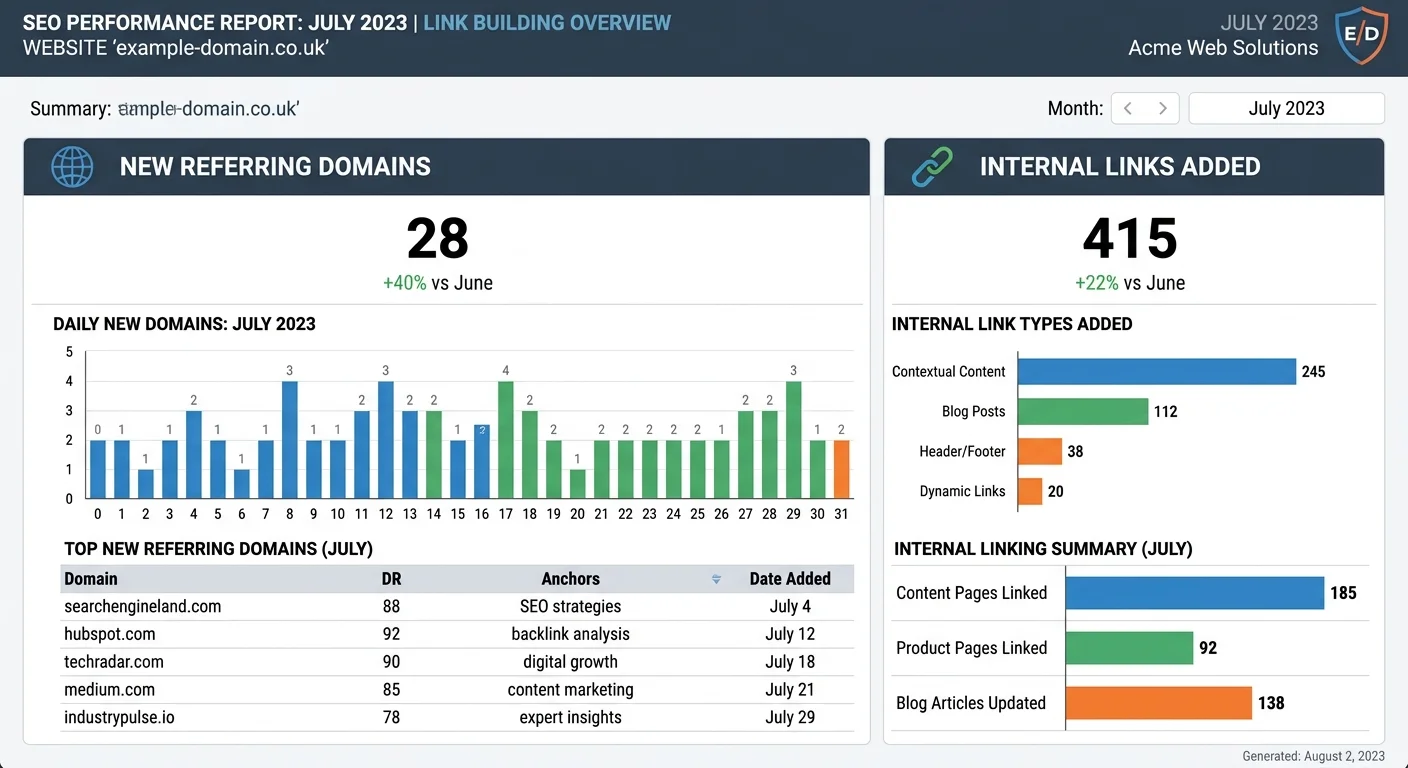
Track your internal link additions in a project management tool or dedicated spreadsheet. Log the date, source URL, target URL, anchor text, and whether the change was indexed. This documentation helps you measure the impact of your internal linking strategy on rankings over time and provides accountability across your team. Without tracking, optimization work becomes invisible.
Finally, build a monthly reporting cadence that combines internal and external link metrics. Report on new referring domains acquired, internal links added, orphan pages fixed, and the resulting changes in organic traffic and keyword positions. This holistic view demonstrates the ROI of your link-building program to stakeholders and justifies continued investment in both internal and external efforts.
Frequently Asked Questions
?How often should I run a site-wide crawl to find internal link gaps?
?Is competitor backlink analysis better than fixing orphan pages first?
?How long does it take to see ranking changes after fixing internal links?
?Can cold outreach realistically earn backlinks, given a 1% conversion rate?
Final Thoughts
Learning how to find internal and external link opportunities is a skill that compounds over time. The nine methods outlined here, from site-wide audits to automated monitoring, form a complete system for continuous link discovery.
Start with your existing site structure, mine competitor data for external targets, and build scalable processes that keep your link graph growing. The teams that treat link building as an ongoing discipline rather than a one-time project are the ones that consistently outrank their competition.
Disclaimer: Portions of this content may have been generated using AI tools to enhance clarity and brevity. While reviewed by a human, independent verification is encouraged.