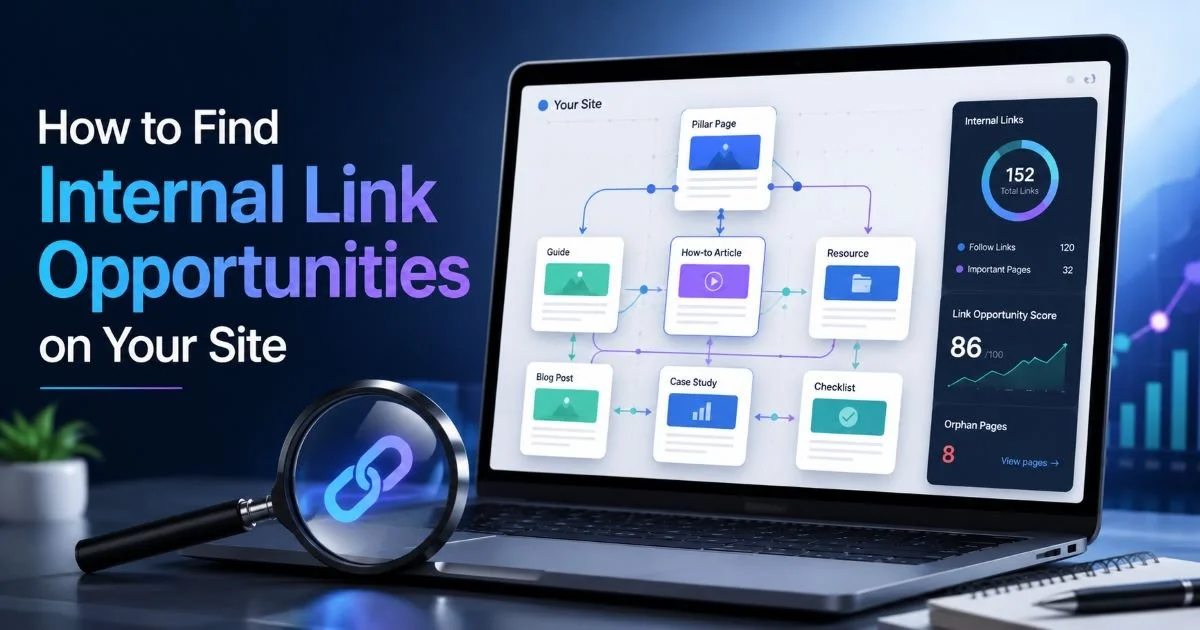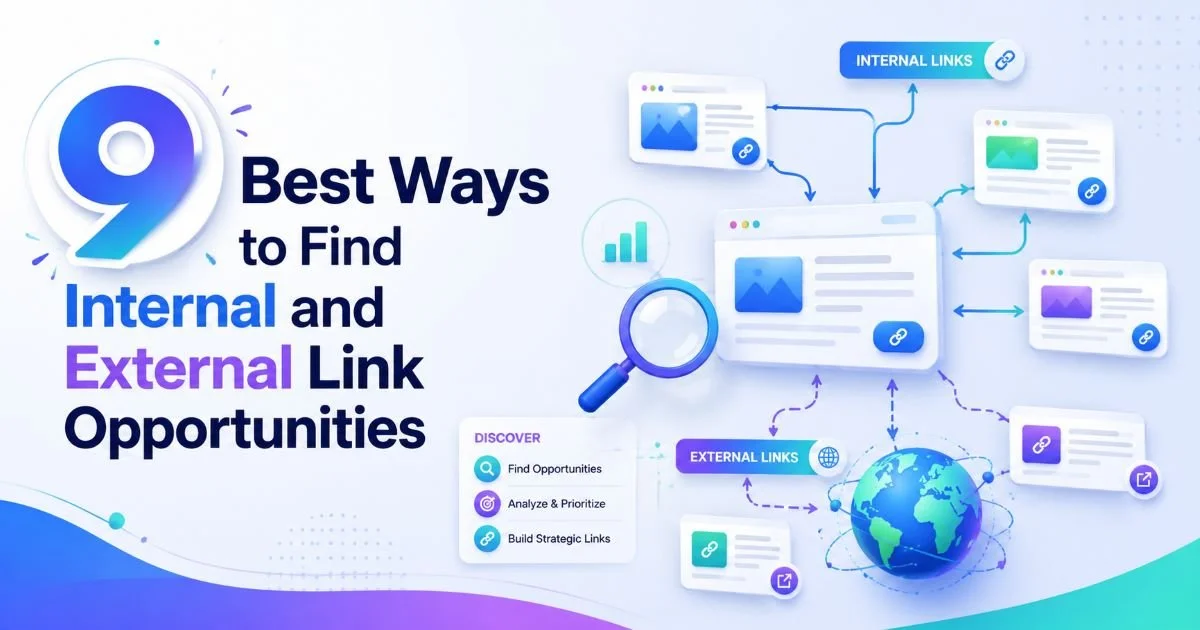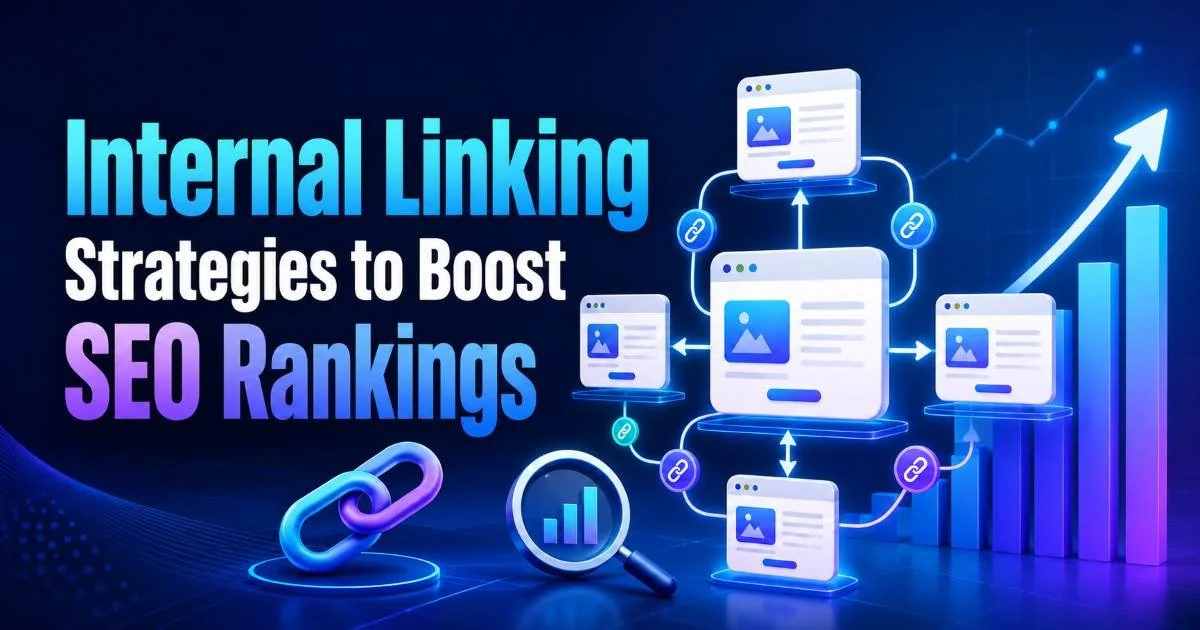
Identifying link-building opportunities is one of the highest-leverage activities an SEO professional can perform. Whether you're optimizing a content hub or launching a new campaign, the links pointing to and within your site directly shape how search engines interpret authority, relevance, and topical depth.
Yet many teams treat link acquisition as an afterthought, something bolted on after content is published rather than woven into the strategy from day one. The result is missed rankings, wasted content, and competitors filling the gap.
This guide walks you through a repeatable, four-step process for uncovering both internal and external link opportunities based on your existing content, your target keywords, and your broader SEO growth goals. Follow each step in order, and you'll build a system that compounds over time.
Key Takeaways
- Audit existing content first to reveal orphan pages and weak internal links.
- Map every target keyword to a specific page before pursuing external links.
- Prioritize external prospects by relevance, authority, and editorial standards.
- Use anchor text variation to avoid over-optimization penalties from Google.
- Review and refresh your link strategy quarterly to match evolving content.
Step 1: Audit Your Existing Content and Link Profile
Crawl for Orphan Pages
Before you hunt for new link-building opportunities, you need to understand what you already have. Run a full site crawl using Screaming Frog, Sitebulb, or a similar tool. Export every indexable URL along with its inlink count, word count, and HTTP status. Pages with zero or one internal inlink are orphans; they exist, but search engines can barely find them, which means they're bleeding potential authority.
Sort the crawl report by inlink count ascending. Any page targeting a commercial keyword with fewer than three internal links deserves immediate attention. These are quick wins: adding two or three contextual links from related articles can lift impressions within weeks. This kind of content link optimization costs nothing and often moves the needle faster than acquiring a new backlink from an external domain.
Export your crawl data into a spreadsheet and color-code pages by inlink count—red for 0-1, yellow for 2-3, green for 4+.
Evaluate Current Backlinks
Next, pull your backlink profile from Ahrefs, Moz, or Google Search Console. Focus on referring domains rather than total links. One high-quality domain linking to you matters more than fifty low-quality ones. Note which pages attract the most backlinks and which have none at all. This distribution tells you where external authority currently concentrates and where gaps exist.
Cross-reference your most-linked pages with your priority keywords. If your top-linked page targets a low-value keyword while a high-value page sits with zero referring domains, you have a misalignment worth fixing. You can redistribute authority through strategic internal links or redirect consolidation. Understanding on-page and off-page dynamics together, as SureOak's analysis explains, gives you the full picture of where effort will pay off most.
Step 2: Map Target Keywords to Linkable Assets
Build a Keyword-Page Matrix
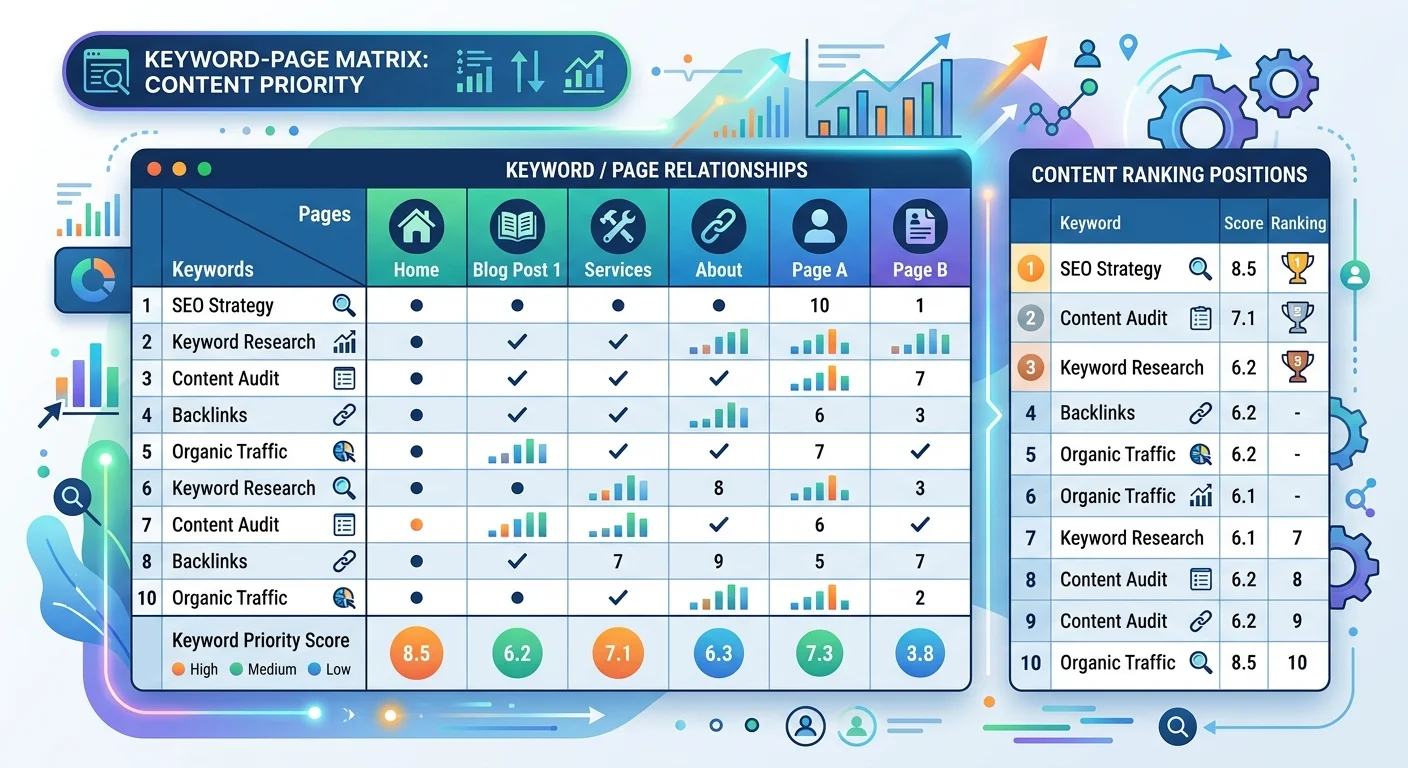
Effective target keyword linking starts with a clear map. Create a spreadsheet with columns for target keyword, assigned URL, current ranking position, monthly search volume, and link priority score. Every keyword in your strategy should point to exactly one page. When two pages compete for the same term, you get cannibalization—and neither page ranks well. Resolve conflicts before building links.
Assign a priority score from one to five based on commercial value and ranking distance. A keyword sitting at positions 8-20 with strong commercial intent deserves a score of five because a handful of quality links could push it onto page one. Keywords already ranking in the top three need maintenance, not aggressive campaigns. This matrix becomes your north star for every outreach decision and internal link you place.
Identify Content Gaps
Your matrix will surface gaps in keywords with no assigned URL because the content doesn't exist yet. These gaps represent future link-building opportunities waiting to be created. Prioritize gaps where you already have topical authority. If you run a marketing blog with strong content around technical SEO, a missing piece on internal linking architecture is a natural next step that will attract links organically.
When planning new content, design it for linkability from the start. Original data, comprehensive frameworks, and visual assets earn links at a far higher rate than generic advice posts. Think about what a journalist, blogger, or resource page curator would actually want to reference. This mindset shift, building for link attraction rather than just keyword coverage, is what separates mediocre campaigns from excellent ones.
"The best link-building strategy starts before the content is written, not after it's published."
Step 3: Find and Qualify External Link Opportunities
Prospect Discovery Methods
Finding external link opportunities requires a mix of tools and manual research. Start with competitor backlink analysis: export the referring domains of your top three competitors and filter for domains that link to them but not to you. These sites have already demonstrated a willingness to link within your niche, making them warm prospects. Tools at linkbuilder.dev/blog can help streamline this discovery process significantly.
Beyond competitor gaps, use advanced Google search operators. Queries like "your topic" + "resources", "your topic" + "recommended reading", and "write for us" + "your niche" surface resource pages, roundup posts, and guest posting targets. Don't ignore broken link building either, finding 404 pages on authoritative sites and offering your content as a replacement remains one of the most reliable SEO link building tactics available today.
Always verify that a prospect site has real organic traffic before pitching. A high Domain Authority with zero traffic often signals a PBN or abandoned site.
Scoring and Prioritization
Not all prospects deserve your time. Build a scoring system that weighs domain relevance, organic traffic, editorial quality, and linking patterns. A niche-relevant site with moderate authority will almost always outperform a high-authority site in an unrelated vertical. Adhering to white-hat link-building principles protects your site from algorithmic penalties and keeps your profile looking natural to Google's spam team.
After scoring, segment prospects into three tiers. Tier one gets personalized outreach with custom pitches. Tier two receives semi-personalized templates. Tier three goes into a nurture list for future campaigns. This tiered approach respects your team's time while maximizing conversion rates. Track every outreach attempt, response, and outcome in a CRM or spreadsheet so you can refine your scoring model based on actual results over time.
Aim for a 10-15% response rate on cold outreach. If you're below 5%, your targeting or pitch needs work.
Step 4: Implement an Internal Linking Strategy That Scales
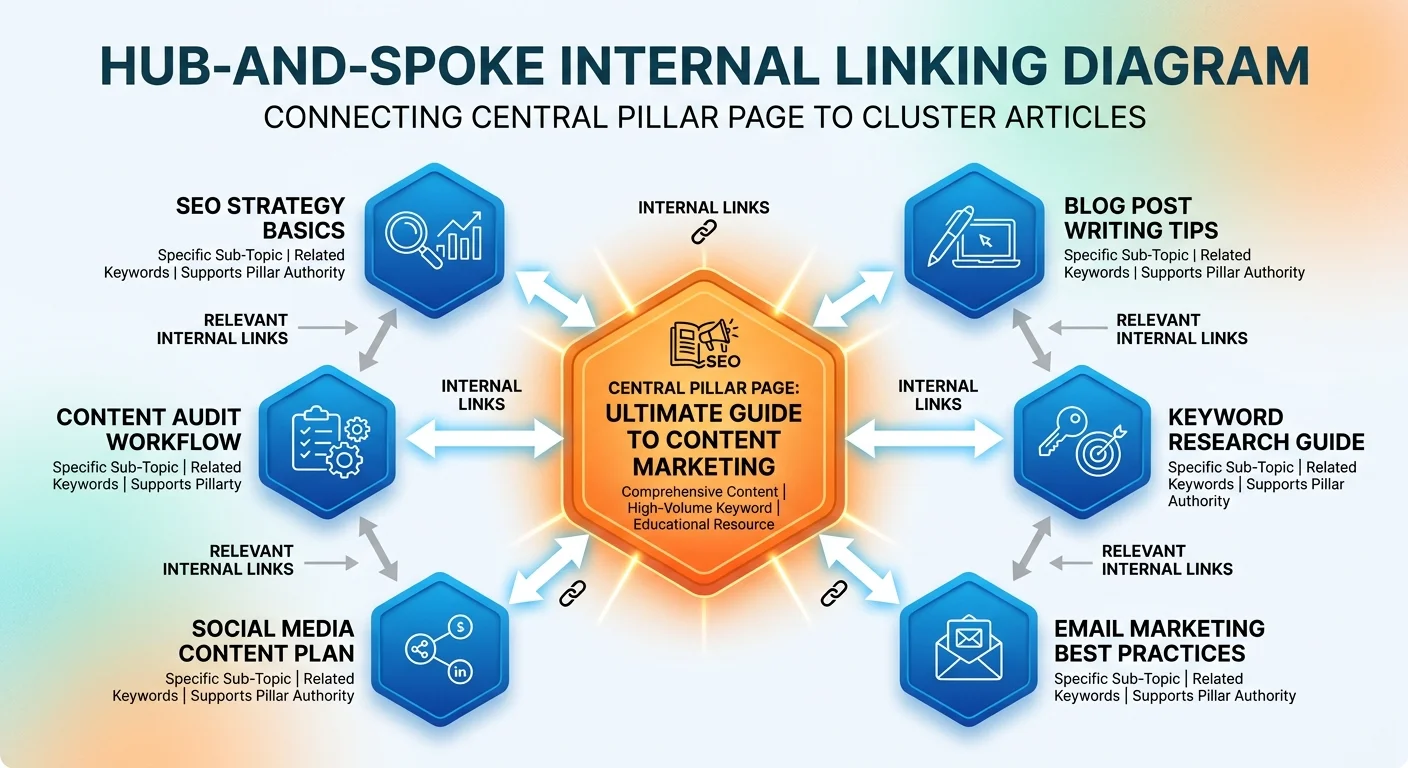
Hub-and-Spoke Architecture
A strong internal linking strategy amplifies every external link you earn. Structure your site around topic hubs, pillar pages that cover a broad subject, supported by spoke articles that address specific subtopics. Each spoke links back to the pillar, and the pillar links out to every spoke. This architecture tells Google exactly how your content relates and which pages carry the most topical weight.
When you earn a backlink to any spoke page, the authority flows through internal links to the pillar and then redistributes across the cluster. This multiplier effect means a single earned link benefits multiple pages. Without intentional internal linking, that same backlink would dead-end on a single page with minimal broader impact. The difference in ranking outcomes between sites with and without this structure is striking.
| Attribute | Internal Links | External Links |
|---|---|---|
| Control | Full control | Limited control |
| Cost | Free (time only) | Time + outreach effort |
| Speed of Impact | Days to weeks | Weeks to months |
| Authority Signal | Distributes existing authority | Introduces a new authority |
| Risk Level | Very low | Moderate if poorly executed |
| Scalability | Highly scalable | Resource-intensive |
Automate Where Possible
Manual internal linking doesn't scale once you pass a few hundred pages. Use tools or plugins that suggest contextual links based on keyword matching and content relevance. WordPress plugins like Link Whisper or custom scripts can scan your content library and flag opportunities you'd never spot manually. The goal isn't to replace editorial judgment but to surface candidates faster.
Set a cadence monthly or quarterly to review your internal link health. As you publish new content, older articles won't automatically link to it. Build a process where every new article triggers a scan of existing content for linking opportunities. This habit alone can double the internal link count of your average page over a year, compounding the authority flow across your entire site.
Over-linking within a single page dilutes the value of each link. Keep contextual internal links to 3-5 per 1,000 words for optimal impact.
Frequently Asked Questions
?How do I fix orphan pages found during a site crawl?
?Is fixing internal links better than chasing external backlinks?
?How long does building a keyword-page matrix actually take?
?Can anchor text variation really trigger a Google penalty?
Final Thoughts
Finding and acting on link-building opportunities isn't a one-time project; it's an ongoing discipline. The four steps outlined here are auditing your current state, mapping keywords to pages, qualifying external prospects, and building scalable internal links, forming a cycle you should revisit every quarter.
Each pass sharpens your targeting and compounds the results of previous efforts. Start with your audit this week, build your keyword-page matrix, and watch how quickly the right links transform your organic performance.
Disclaimer: Portions of this content may have been generated using AI tools to enhance clarity and brevity. While reviewed by a human, independent verification is encouraged.