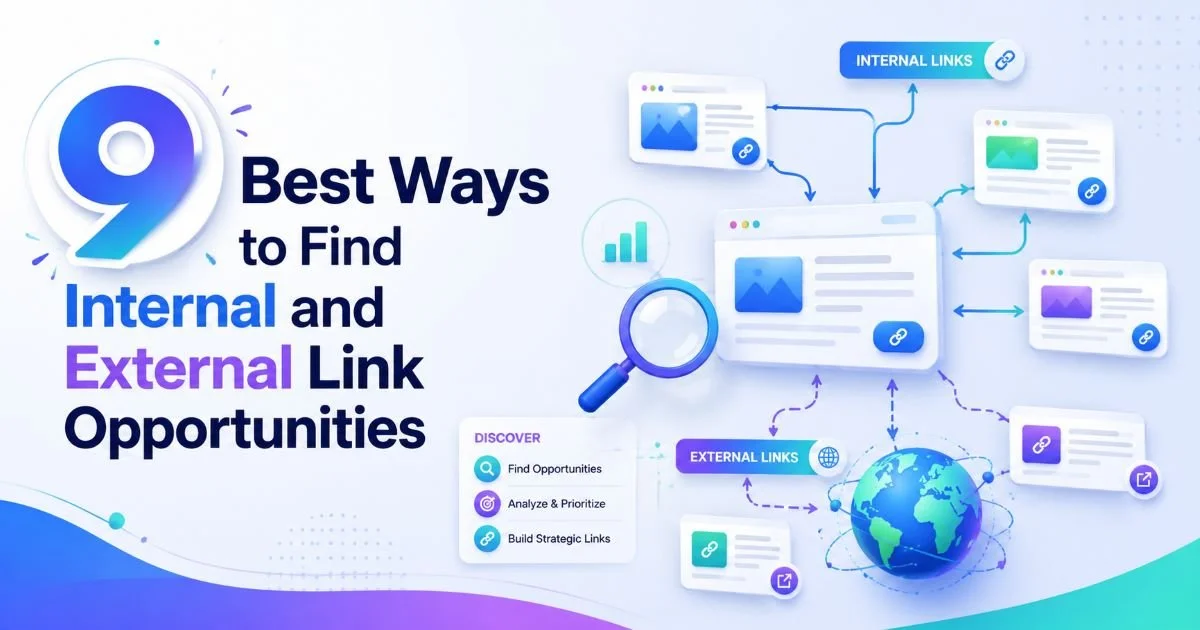
Understanding how to find internal and external link opportunities starts with one fundamental skill: evaluating whether content actually deserves a link. Not every blog post, resource page, or infographic warrants outreach. Before you send a single email, you need a reliable framework for assessing link worthiness.
Too many SEO professionals waste hours pitching content that simply doesn't meet the bar. The result? Low response rates, damaged credibility, and wasted budgets. This guide walks you through a step-by-step process for evaluating content quality before it becomes part of your outreach strategy. If you've already explored our comprehensive guide on how to find internal and external link opportunities, this article will sharpen your ability to vet what you've found.
Key Takeaways
- Evaluate content depth, originality, and data quality before adding it to any outreach list.
- Check domain authority, traffic trends, and topical relevance as baseline quality signals.
- Audit the page's existing backlink profile to gauge whether others found its link worthy.
- Use structured scoring criteria rather than gut instinct to prioritize outreach targets consistently.
- Content that solves a specific problem or presents unique research earns links most reliably.

Step 1: Assess Content Depth and Originality
The first filter for any potential link target is substance. Open the page and read it, actually read it, not just skim the headings. Does the content go beyond surface-level advice that you could find on a dozen other sites? Link-worthy content typically covers a topic with enough depth that readers walk away with actionable knowledge they couldn't easily get elsewhere. Thin content with recycled tips is a red flag.
Look for original data, proprietary research, expert interviews, or unique frameworks. These elements signal that the creator invested real effort, which makes the content more valuable to both readers and search engines. A page that references its own survey results, for example, carries far more link equity potential than one that simply repackages third-party statistics without adding new analysis or interpretation.
What Makes Content Original
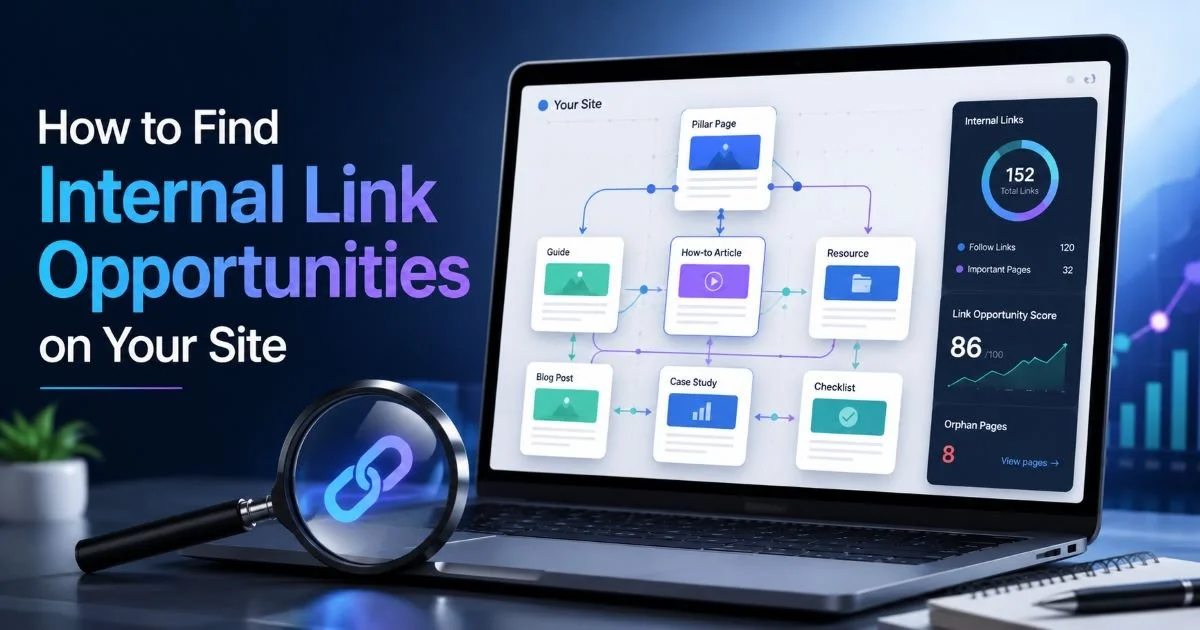
Originality isn't about being first to publish on a topic. It's about adding a perspective, dataset, or methodology that doesn't exist elsewhere. Case studies with real numbers, interactive tools, and comprehensive comparison guides all perform well. If you're building out your own site's internal linking structure, our guide on how to find internal link opportunities on your site explains how to identify pages that already have this kind of depth.
Ask yourself: would a journalist or researcher cite this page? If the answer is no, it probably won't attract links through cold outreach either. Content that merely states opinions without evidence or rehashes common knowledge will produce dismal outreach response rates, no matter how polished your email templates are.
Before pitching any content, search its main headline in quotes on Google. If five nearly identical articles exist, the content lacks the originality needed for successful outreach.
Step 2: Analyze Domain and Page-Level Metrics
Once you've confirmed the content has genuine depth, shift to quantitative analysis. Domain Authority (or Domain Rating, depending on your tool) gives you a baseline sense of how much authority a link from that site would pass. But domain-level metrics alone tell an incomplete story. A DA 60 site might have individual pages with zero traffic and no referring domains, making those specific pages weak link targets despite the strong domain.
Pull up the specific URL in Ahrefs, Moz, or Semrush. Check the page's organic traffic trend over the past 12 months. A page with declining traffic may be losing relevance, which means any link you earn could diminish in value. Conversely, pages with steady or growing traffic indicate ongoing editorial investment and search engine trust. Also, evaluate whether the page has been recently updated — freshness matters.
Key Metrics to Check
| Metric | What It Tells You | Ideal Benchmark |
|---|---|---|
| Domain Authority / Rating | Overall site credibility | 30+ for most niches |
| Page-Level Traffic | Content visibility and demand | 100+ monthly visits |
| Referring Domains to Page | Others already found it link worthy | 5+ unique domains |
| Traffic Trend (12 months) | Content longevity and freshness | Stable or growing |
| Spam Score | Risk of association with low-quality sites | Below 5% |
| Last Updated Date | Editorial maintenance commitment | Within 12 months |
Don't ignore the spam score. A high spam score — typically above 10% in Moz's system suggests the domain may have a problematic backlink profile or engage in practices that could trigger penalties. Getting a link from such a site could hurt rather than help your rankings. When learning the best ways to find internal and external link opportunities, always pair discovery with this kind of due diligence.
Never pursue links from domains with spam scores above 10% or those showing sudden traffic drops — algorithmic penalties can be contagious through link association.
Step 3: Evaluate Topical Relevance and Audience Fit
A high-authority page with great content still isn't a good outreach target if it's topically irrelevant to your niche. Google's algorithm has grown increasingly sophisticated at evaluating contextual relevance. A link from a fitness blog pointing to your SaaS marketing tool looks unnatural and provides minimal ranking benefit. Relevance isn't just about keywords, it's about whether the linking page's audience would genuinely find your content useful.
Read three to five recent articles on the target site. Do they cover topics adjacent to yours? Does the site's audience overlap with your target personas? If you're in the SEO space, a link from a digital marketing publication or a developer tools blog makes contextual sense. A link from a cooking recipe site does not, regardless of its DA score. This is where many link builders go wrong — chasing metrics while ignoring the human beings behind the screens.
"The best link opportunities sit at the intersection of high authority, genuine relevance, and content that your audience actually needs."
Matching Content to Your Niche
Map out the topical clusters your content occupies and identify adjacent clusters where outreach makes sense. For instance, if you publish content about AI-driven marketing tools, a resource like the best LLMs for marketing would be a natural fit for link exchange or co-citation. The topical bridge is clear, and both audiences benefit from the cross-reference.
Audience fit extends beyond topic to intent. If the target content serves an informational intent and your page targets commercial intent, the link still works — readers in the information-gathering phase often progress toward solutions. However, linking between two purely commercial pages feels forced and looks manipulative to both users and search engines. Having a solid internal linking strategy to boost SEO rankings helps you understand these intent dynamics from your own site's perspective first.
Topical relevance has become a stronger ranking signal since Google's Helpful Content Update. Prioritize thematic alignment over raw authority in your outreach decisions.
Step 4: Build a Scoring System for Outreach Prioritization
Gut feelings don't scale. When you're evaluating dozens or hundreds of potential link targets, you need a repeatable scoring system. Create a simple spreadsheet with weighted criteria drawn from the previous three steps: content quality, domain and page metrics, and topical relevance. Assign each criterion a weight based on your campaign goals, then score every prospect on a 1-to-5 scale for each factor.
For example, if you weight content quality at 30%, domain metrics at 30%, and topical relevance at 40%, a highly relevant page with moderate authority will outscore a high-authority page with weak relevance. This approach prevents the common mistake of chasing vanity metrics. It also gives your outreach team a shared language for discussing prospects, which eliminates subjective debates about whether a target is "good enough."
Sample Scoring Framework
Once your scoring system is in place, set a minimum threshold. Prospects scoring below 3.0 out of 5.0, for example, don't make the outreach list at all. This saves enormous time. Most experienced link builders report that fewer than 30% of initially identified prospects actually pass a rigorous evaluation. That's fine, a smaller list of high-quality targets will always outperform a massive list of mediocre ones in response rate and link acquisition.
Review and refine your scoring criteria quarterly. Search engine algorithms evolve, your content portfolio changes, and industry benchmarks shift. A scoring system that worked six months ago might overweight factors that have become less relevant. Treat your evaluation framework as a living document. Track which scores correlated with successful link placements and adjust weights accordingly. Over time, your system becomes a competitive advantage that compounds.
Export your scoring spreadsheet as a template and share it with your team. Standardization across evaluators prevents one person's preferences from skewing your entire outreach pipeline.
Frequently Asked Questions
?How do I build a scoring system to prioritize outreach targets?
?Is guest posting still worth it compared to digital PR for links?
?How long does evaluating link-worthy content take before outreach?
?Does polished email outreach fix weak or unoriginal content?
Final Thoughts
Evaluating link-worthy content for outreach isn't glamorous, but it's where successful campaigns are won or lost. By systematically assessing content depth, domain metrics, and topical relevance and applying a structured scoring system, you eliminate wasted effort and focus on prospects that actually move the needle.
The discipline of evaluation separates professionals who build lasting authority from those who chase links that deliver nothing. Start building your scoring framework today, apply it to your next outreach batch, and watch your response rates climb.
Disclaimer: Portions of this content may have been generated using AI tools to enhance clarity and brevity. While reviewed by a human, independent verification is encouraged.